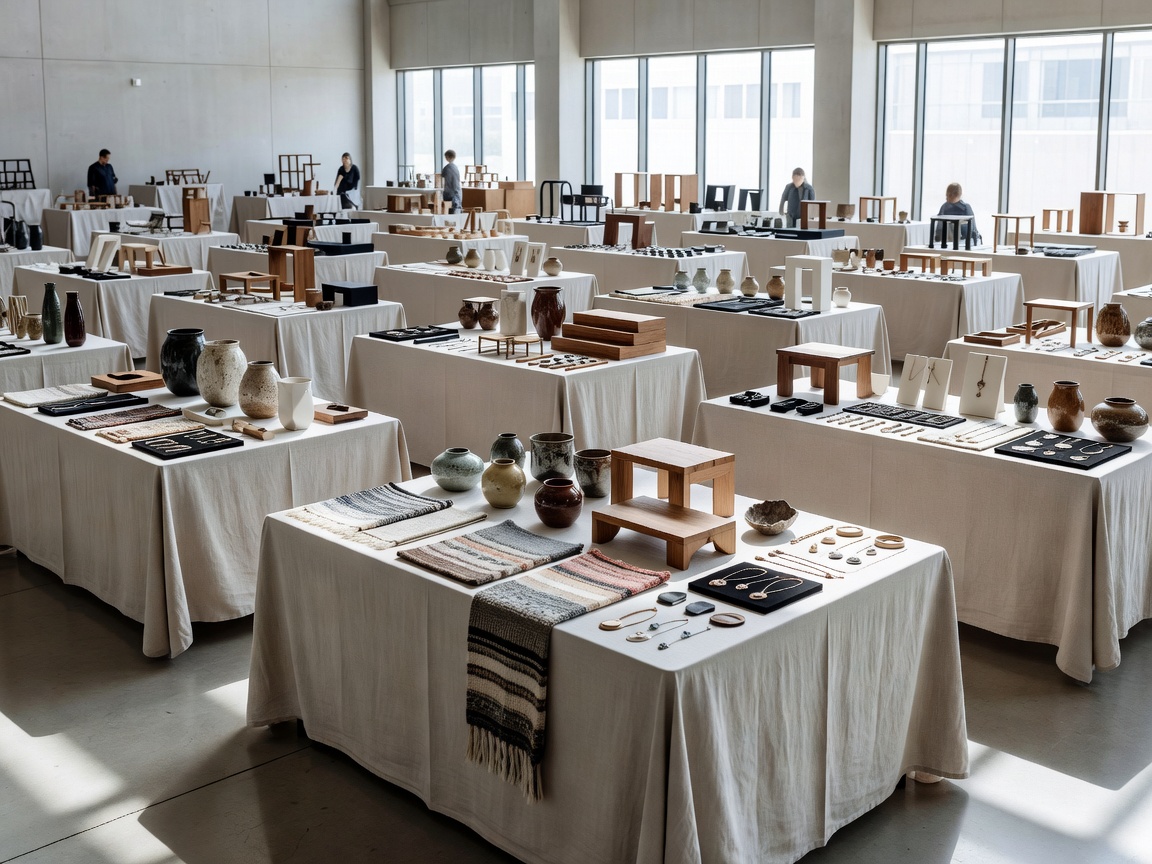
A market may be a recurring outdoor gathering, a temporary indoor programme, a permanent design district or a small studio-led event. These categories overlap in public language. They do not work in the same way for visitors. Start with the operating model. Ask who selects the participants, who sells the objects and whether the event is built for browsing, collecting, trade or community exchange.
Recurring and temporary formats
Recurring markets use a known rhythm. The rhythm may be monthly, seasonal or linked to a city programme. The exact participants can change. A recurring event is useful for understanding a local scene, but it should not be treated as a fixed catalogue.
Temporary markets are shorter and more concentrated. They may occupy a hall, courtyard, gallery cluster or unused commercial space. They can bring together furniture, ceramics, textiles, prints and food-adjacent objects. Their selection often depends on a specific organiser and venue.
Market, fair, district or gallery?
- Design market: direct browsing and purchase, often with independent makers or small retailers.
- Craft market: stronger emphasis on hand process, material skill and functional goods.
- Antiques market: pre-owned objects, age, condition and provenance matter.
- Trade fair: professional networking, wholesale relationships and brand presentation.
- Gallery event: curated presentation, authorship and exhibition context may lead.
- Creative festival: talks, workshops, installations and performances share the programme.
Independent versus commercial
Independent formats usually give more space to maker stories, limited production and direct conversation. Commercial formats may provide broader stock, established logistics and consistent retail presentation. Neither is automatically better. The useful question is whether the format matches your purpose.
For a first visit, note the ratio of makers to resellers. Look for clear maker names, production notes and material information. Ask whether an object is made by the person present, produced by a studio team or sourced from another supplier.
Objects and buying purpose
Atmosphere is not the same as suitability. A crowded market can be useful for discovery but difficult for comparing scale or finish. A calmer district can support careful buying. Furniture requires dimensions, access and delivery planning. Ceramics require packaging. Textiles require fibre and care information. Prints require size, edition information and protection.
Regional variation
European design culture crosses borders. Still, local production systems influence what appears in a market. Northern scenes may foreground timber, restraint and repair. Western urban markets often connect studios with galleries and retail districts. Central regions may combine established craft knowledge with new fabrication. Southern scenes can show strong ceramic, textile and material traditions. Eastern scenes often connect industrial history, craft revival and experimental studios. These are working lenses, not rankings.
Good for
- Comparing independent objects in one visit.
- Finding small studios without committing to a gallery programme.
- Understanding local materials and production language.
- Building a route around a district or temporary venue.
What to know
Current dates, opening times, access rules and participant lists change. Use official organiser or venue sources before travelling. Do not assume that a recurring name guarantees the same layout or exhibitors.